The Science of Flow States in Professional Athletes
Achieving peak performance is the aspiration of every athlete. At the heart of this pursuit lies the elusive “flow state”—a mental zone where time slows, focus sharpens, and performance feels effortless. While flow states have long fascinated psychologists, their practical application in sports becomes more tangible when linked to values-based performance and the evolution of Performance Capability Levels—TR1, TR2, and TR3. At the highest level, TR3, performance transcends technical execution, becoming a reflection of identity, purpose, and contribution. It shifts from answering questions of “what” and “how” to exploring the deeper questions of why, who, and for whom.
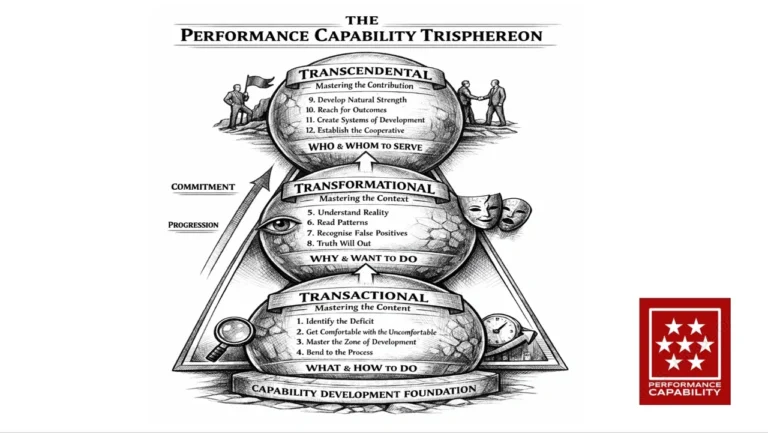
To understand the relationship between flow and TR3, it’s essential to first explore the foundation built at TR1 and TR2. Performance Capability Level 1 (TR1) is about practice-based skill development. It focuses on managing the content of performance—mastering the “what to do” and “how to do it.” Athletes at this stage develop their technical proficiency and tactical understanding through repetition and deliberate practice. This foundational work is critical, as it builds the physical and cognitive tools necessary for success.
However, performance capability evolves beyond mechanics. At Performance Capability Level 2 (TR2), the focus shifts to mastering the context through principle-based thinking. Here, athletes begin to explore the “why” behind their actions, moving beyond rote execution to purposeful engagement. This stage is about cultivating intrinsic motivation—understanding why the effort matters and aligning actions with a sense of personal meaning. TR2 also introduces the “want to do” mindset, where athletes embrace challenges not just out of obligation but from a genuine desire to grow and succeed. This transformational level sets the stage for a deeper level of integration.
Performance Capability Level 3 (TR3) represents the pinnacle of athletic evolution. At this stage, performance becomes about making a contribution through values-based action. Athletes at TR3 no longer focus solely on mastering skills (TR1) or finding purpose for themselves (TR2). Instead, they begin to ask the profound questions of who they are becoming through their journey and for whom they are performing. TR3 is about transcendence—using one’s skills and principles to create value for others and leave a lasting impact. “At TR3, performance is no longer just about success; it’s about significance,” I often tell athletes. “It’s about connecting what you do to who you are and who you’re serving.”
This evolution—from TR1 to TR3—lays the foundation for flow states to emerge. Flow thrives when there is alignment between an athlete’s abilities, purpose, and values. At TR1, the technical and tactical skills developed through deliberate practice create the competence required for effortless action. At TR2, principle-based thinking ensures athletes have the mental clarity and motivation to sustain focus. Finally, at TR3, the alignment of values, identity, and contribution provides the emotional depth and connection that amplifies engagement and presence.
Flow itself is characterized by effortless focus, complete immersion, and a sense of harmony between challenge and skill. However, it doesn’t occur in isolation; it is cultivated through intentional preparation and alignment with purpose. Athletes who operate at TR3 consistently create the conditions for flow because their performance is grounded in deeply held values and a clear sense of identity. “Flow isn’t just about being in the zone—it’s about being in alignment,” I often remind athletes. This alignment reduces distractions, enhances focus, and allows athletes to perform at their best.
The questions of why, who, and for whom are central to achieving this alignment. At TR2, athletes begin to explore their “why”—the deeper purpose behind their effort. This intrinsic motivation fuels their desire to engage fully and persist through challenges. At TR3, the focus expands to “who” they are becoming and “for whom” they are creating value. These questions transform performance from a personal endeavor into a meaningful contribution. Whether they are competing for their teammates, their family, their community, or a higher calling, athletes at TR3 find a source of motivation that transcends individual ambition. This connection to others enhances their commitment and provides the clarity needed to enter flow.
Ultimately, the science of flow states and the evolution through TR1, TR2, and TR3 reveal that peak performance is about much more than physical or technical ability. It’s about understanding and aligning the “what,” “how,” “why,” “who,” and “for whom.” By building skills at TR1, mastering context at TR2, and making a meaningful contribution at TR3, athletes unlock the extraordinary. Flow becomes not just a state of peak performance but a profound expression of purpose, identity, and connection. It’s the ultimate realization of an athlete’s potential and the value they create for the people who are inspired to watch them.
Hi and thanks for reading this post. I hope you gained some value from it. Please sign up below and you will join my community for updates and live events. You can also find my main business at: www.performancecapability.com
© Ben Benson