The Capability Gap: Why Smart People Fail to Execute
You know what you need to do. You’ve known for months, maybe years. The strategy is clear. The path forward is obvious. Yet here you are, still planning, still preparing, still waiting for the perfect moment that never arrives.
This isn’t ignorance. It’s something far more insidious.
The most devastating failures in business, leadership, and life don’t come from not knowing better. They come from the chasm between knowing and doing—between what we understand in theory and what we actually execute when stakes are high and time is scarce. This is the capability gap, and it’s quietly destroying more potential than any lack of intelligence or resources ever could.
The Illusion of Readiness
We’ve built an entire culture around preparation. Strategic planning. Market research. Feasibility studies. Risk assessments. We tell ourselves we’re being prudent, responsible, thorough. We’re “doing our homework.” But somewhere along the way, preparation became a sophisticated form of avoidance.
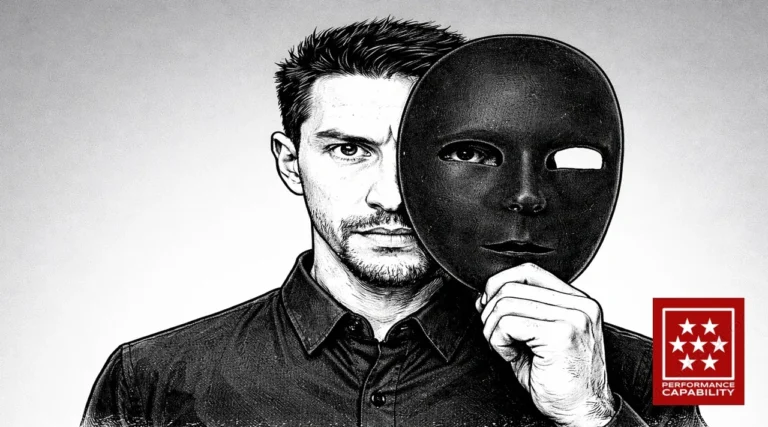
Consider the executive who spends months perfecting a restructuring plan while her company bleeds talent and market share. Or the entrepreneur who refines his pitch deck through seventeen iterations instead of talking to actual customers. They’re not lazy. They’re not stupid. They’re acting on their approach in theory while failing in their approach in use.
The Roman statesman Cato the Younger understood this distinction viscerally. When Julius Caesar’s forces threatened the Republic, Rome’s Senate didn’t lack for brilliant strategists or eloquent philosophers. They had plenty of men who could theorize about constitutional law and republican virtue. What they lacked were men willing to act decisively in the moment when theory met reality. Cato stood almost alone—not because he knew more than his colleagues, but because he refused to let contemplation become a substitute for commitment.
The Seduction of Analysis
Modern organizations have become temples to the god of Analysis. We generate reports about reports. We hold meetings to plan meetings. We’ve convinced ourselves that more information equals better decisions, when often it just equals more delay.
This isn’t about being anti-intellectual or dismissing the value of careful thought. It’s about recognizing when analysis has crossed the line from tool to weapon—a weapon we use against our own forward momentum.
The uncomfortable truth: most decisions don’t require more information. They require more courage.
You already know if that underperforming team member needs to go. You already know if that strategic partnership isn’t working. You already know if that market opportunity is slipping through your fingers. What you’re calling “due diligence” is often just sophisticated procrastination dressed in business casual.
The Cost of Inaction
Delay compounds like debt. Every day you don’t act is a day you pay interest on your indecision. Markets shift. Competitors move. Teams lose confidence. Opportunities evaporate. And perhaps most devastatingly, you train yourself in the habit of hesitation.
Inaction isn’t neutral. It’s a choice with consequences—usually worse consequences than imperfect action would have produced.
Look at Blockbuster’s response to Netflix. They had the resources, the market position, the customer base. They even had the insight—their own executives identified the streaming threat years before it destroyed them. What they lacked wasn’t knowledge. It was the willingness to cannibalize their existing business model before someone else did it for them. They understood in theory. But they failed in use.
Or consider the countless family businesses that crumble during succession because everyone knows the current leader needs to step back, but nobody wants to have the difficult conversation. The analysis is clear. The action is avoided and the business eventually pays the price.
The Transactional, Transformational, and Transcendental
Performance exists on three levels, each requiring different forms of action.
At the transactional level, execution means simply doing what you said you’d do when you said you’d do it. This sounds elementary, but most organizations fail here consistently. Promises made in Monday’s meeting evaporate by Friday afternoon. Deadlines slide. Commitments become suggestions.
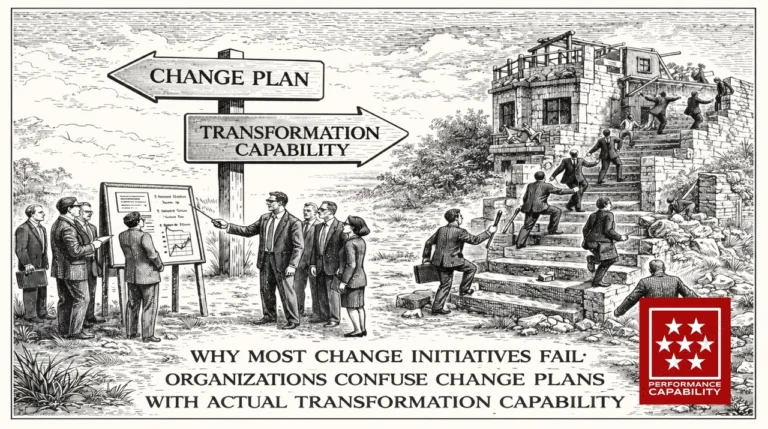
At the transformational level, execution means changing your approach when reality demands it—even when that approach feels like part of your identity. The founder who built a company through hustle learning to build through systems. The technical genius learning to lead through delegation rather than demonstration. This requires you to act against your own established patterns.
At the transcendental level, execution means aligning your actions with principles that outlast any specific situation. This is Cato choosing death over compromise. This is the leader who takes the career-limiting stand because the alternative means abandoning who they are. This is action as expression of character, not calculation.
Most people never reach the transcendental because they haven’t mastered the transactional. You can’t act on principle if you can’t even act on your calendar.
Breaking the Pattern
How do you close the capability gap? How do you move from understanding to execution?
First, recognize that action creates information. The entrepreneur who ships an imperfect product learns more in a week than the entrepreneur who spends a month refining specifications. The leader who makes the difficult personnel decision discovers that the aftermath is rarely as catastrophic as the anticipation. Movement generates data that planning can’t produce.
Second, understand that your identity is built through action, not intention. You’re not who you think you are or who you plan to become. You’re who you prove yourself to be through accumulated decisions under pressure. The capability gap exists because we confuse the person we imagine being with the person our actions demonstrate we actually are.
Third, embrace the reality that perfect clarity is a luxury you’ll rarely have. If you’re waiting to feel certain, you’ll be waiting forever. The Roman emperor Marcus Aurelius, despite all his philosophical wisdom, still had to make consequential decisions with incomplete information. He acted from his best judgment in the moment, knowing that delay wasn’t wisdom—it was abdication.
Fourth, build systems that force execution. Deadlines with real consequences. Public commitments that create accountability. Structures that make inaction more painful than action. You must make the capability gap uncomfortable to tolerate.
The Practice of Execution
Closing the capability gap is a practice, not an epiphany. It’s built through thousands of small decisions to act rather than defer. To commit rather than equivocate. To execute rather than elaborate.
Start with today. What’s the decision you’ve been avoiding? What’s the conversation you’ve been delaying? What’s the action you keep telling yourself you’ll take “once conditions are right”?
Conditions are never right. Right is what you make through action.
The gap between approach in theory and approach in use, between knowing and doing, between understanding and executing—this is the defining challenge of performance. Everything else is commentary.
You can read another post. Attend another seminar. Hire another consultant. Refine your approach. Perfect your strategy. Or you can close this article, identify the one action you’ve been avoiding, and do it before the sun sets today.
Theory won’t close the capability gap. Only execution will.
These principles—and nineteen others like them—are explored in depth in my forthcoming book “Act, Not Acted Upon: A Philosophical Treatise on Action and Its Necessity,” by Ben Benson. A systematic examination of why intelligent people fail to execute and how to build the capability that closes the gap between knowing and doing.
Thanks for reading this post. I hope you gained some value from it. Please sign up below and you will join my community for updates and live events. You can also find my main business at: www.benson-speaks.com www.performancecapability.com
© Ben Benson