Rooted to Rise: Aligning Human Propensities and Human Necessities
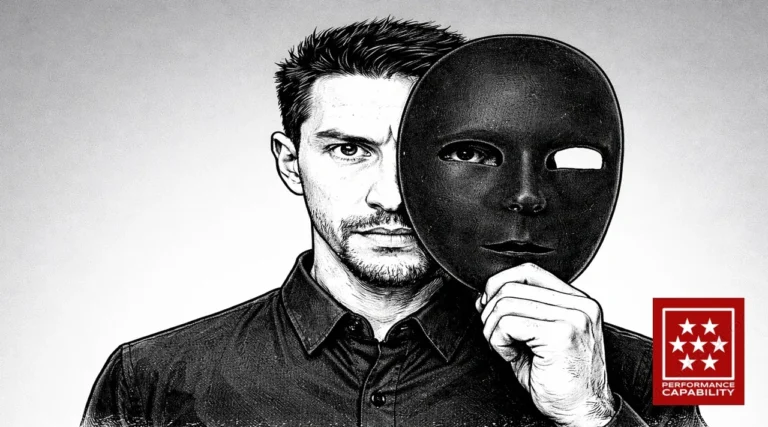
Human behavior can often appear contradictory or confusing—ambitious action met with internal dissatisfaction, social conformity masking personal disconnection, or well-intended discipline yielding burnout. These outcomes are not typically the result of a flawed character or poor motivation, but rather a deeper misalignment between two critical elements of the human experience: our human propensities (Values) and our human necessities (Needs).
This message explores the idea that psychological and behavioral misalignment emerges when the values individuals live by do not adequately serve their essential psychological and emotional needs. Drawing from contemporary psychological frameworks and historical context, this article presents an argument for the deliberate integration of propensities with necessities as a pathway toward sustainable well-being, integrity, and fulfillment.
Human necessities, for the purpose of this discussion, refer to the core human needs that are foundational for psychological and emotional health. These include the need for safety, love and connection, significance, autonomy, growth, contribution, and choice. They are non-negotiable. When these needs are unmet, dysfunction emerges, even if outward success is present.
Human propensities, in contrast, refer to the values, traits, and belief systems that shape how individuals behave, prioritize, and make decisions. These include attributes such as discipline, ambition, loyalty, humility, and sacrifice. They are not innate but are often culturally inherited, socially reinforced, and personally developed.
The relationship between these two elements is dynamic and often misunderstood. When human propensities are directly informed by and responsive to human necessities, the result is behavioral coherence. When they diverge—when individuals pursue values that suppress or override their core needs—the result is often internal conflict, disconnection, and psychological stress.
A historical example that underscores this dynamic is the life of Ignaz Semmelweis, a Hungarian physician practicing in Vienna in the mid-19th century. Semmelweis identified a direct correlation between physicians’ lack of handwashing and the high mortality rates of women in maternity wards. Guided by his internal values—scientific integrity, responsibility, and compassion—he instituted handwashing protocols that drastically reduced mortality. However, his efforts were met with resistance. The prevailing medical culture, driven by tradition, hierarchy, and professional pride, rejected his findings. Semmelweis’s propensities aligned with core human necessities: the right to life, dignity, and safety. Yet his institutional environment operated on conflicting values, and the resulting misalignment led to his marginalization and eventual demise. Only years later, with the advent of germ theory, was the validity of his work universally acknowledged.
Semmelweis’s story is illustrative: when human propensities serve necessity, profound good can result. When they clash—personally or institutionally—resistance, dysfunction, and even tragedy can follow.
This alignment is not only essential for personal fulfillment—it is also critical for high performance in every domain of life. In business, leaders and teams perform at their highest level when their values align with core human needs like choice, growth, and contribution. In relationships, sustainable connection depends on mutual alignment with needs such as love, autonomy, and significance. In sports, peak performance arises when discipline and ambition are matched with vitality, meaning, and self-respect. And in life more broadly, individuals thrive not just by holding strong values, but by ensuring those values serve the deeper needs that energize and sustain human motivation.
To operationalize this insight, we identify seven core human necessities:
These seven necessities also serve as the conceptual foundation of Performance Capability (brand) mark, symbolized visually by the seven stars in its logo. Each star represents one of these universal drivers of human fulfillment, underscoring their central role in shaping enduring performance and success across all domains of life.
- To live – the need for safety, physical health, and vitality.
- To love and be loved – the need for connection, intimacy, and acceptance.
- To feel important – the need for significance, recognition, and esteem.
- To choose – the need for freedom, and agency.
- To grow – the need for learning, development, and progress.
- To contribute – the need for impact, usefulness, and purpose.
- To be autonomous – the need for self-leadership
These necessities represent the metaphorical roots of the human condition. When nourished, they support flourishing in all visible aspects of life. Human propensities—our values—are the branches. They must grow in ways that reflect and respond to the strength and integrity of those roots. A person who prioritizes ambition without attending to rest, connection, or growth may achieve recognition but suffer exhaustion or emptiness. Likewise, someone who upholds loyalty to tradition without examining whether that tradition supports their well-being may find themselves constrained, disempowered, or unfulfilled.
It is important to recognize that not all values are inherently constructive. A value is only adaptive when it reinforces rather than undermines human necessities. Misaligned propensities create a state of psychological incongruence—experienced as fatigue, anxiety, resentment, or disengagement. However, such conflict also signals opportunity. It invites realignment—a conscious re-evaluation of what values are being upheld, and whether those values are genuinely meeting the underlying human necessities.
The path forward is a realignment of human propensities with human necessities. This is not a dismissal of discipline, ambition, or sacrifice. Rather, it is a refinement: ensuring that those propensities serve a life that is vital, connected, autonomous, and purposeful. Individuals who consistently ask whether their values are reinforcing their core needs position themselves not only for success, but for sustained coherence and well-being.
The quality of our lives is determined not only by what we pursue, but by whether what we pursue meets what we truly need. When human propensities are rooted in human necessities, behavior becomes sustainable, values become enriching, and life becomes integrated. In that alignment, individuals don’t just function—they flourish.
See the book: Understanding the Seven Stars here:
Hi and thanks for reading this post. I hope you gained some value from it. Please sign up below and you will join my community for updates and live events. You can also find my main business at: www.performancecapability.com
© Ben Benson