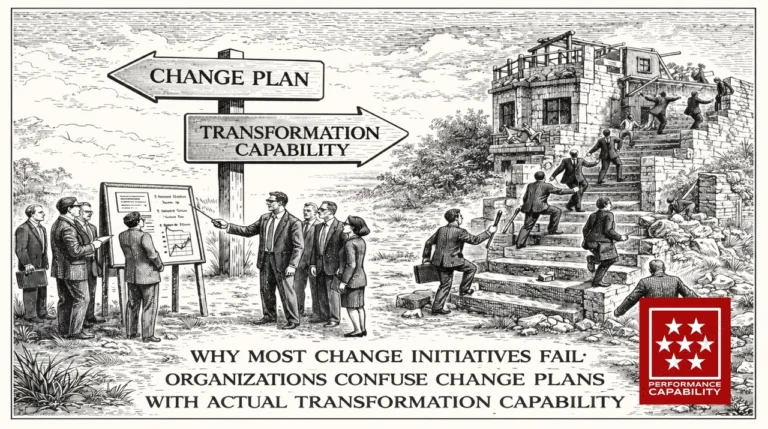
The Power of Measuring & Reporting Performance Capability
In the modern landscape of organizations and personal development, the concept of performance improvement holds an undeniably central role. Whether it’s in a business setting, athletics, education, or even self-development, the capacity to improve over time is what separates stagnation from growth, mediocrity from excellence. But what drives this improvement? One often overlooked answer is surprisingly simple: measurement.
At its core, measurement offers feedback, and feedback is the critical ingredient in any process of enhancement. Without measurement, progress can neither be assessed nor directed. Yet, when performance capability is measured, a subtle yet profound change occurs—both in the individual and the organization. The act of monitoring itself creates a shift, motivating the subject toward better results.
The Importance of Measurement: Why Does It Matter?
Performance in any sphere is typically influenced by multiple variables. In the absence of concrete data, it’s impossible to pinpoint which elements contribute to success or failure. Measurement provides this clarity, delivering insights that would otherwise remain hidden. It creates a factual basis from which strategies for improvement can be developed.
Consider an organization that aims to improve its customer service ratings. If no system is in place to track customer satisfaction, employees will remain unaware of their current standing and have little motivation to make tangible changes. However, when consistent measurement tools are introduced—customer surveys, feedback loops, or satisfaction scores—the dynamics shift. Employees now have a clear picture of their performance and, more importantly, a benchmark for what needs to change.
In essence, measurement brings awareness, and with awareness comes responsibility. Individuals are far more likely to be proactive about improvements when they know their current status and understand what is expected of them.
The Role of Reporting: Amplifying the Impact
While measurement is the starting point, reporting takes the process to the next level. Reporting introduces accountability, visibility, and external validation into the mix. When results are reported to supervisors, team members, or broader audiences, the focus on performance sharpens, and the pressure to improve intensifies.
This phenomenon occurs for several reasons. First, the very act of reporting adds a layer of accountability. Knowing that others will review the results creates a sense of ownership over the performance. In a work setting, employees who are aware their metrics will be discussed in team meetings, for example, feel an increased responsibility to enhance those metrics.
Second, reporting adds an element of social motivation. People, by nature, are inclined to compare themselves to others. Whether it’s a salesperson striving to outperform colleagues in terms of revenue or an athlete aiming to exceed past personal records, the social dimension of comparison spurs effort. Reporting allows for this comparison to become tangible and measurable.
Finally, the transparency that reporting brings can drive a shared sense of purpose. When teams collectively review performance reports, they gain insight into both their individual contributions and the larger organizational goals. It fosters a culture of collective accountability where everyone is working towards a common vision, using data as their guide.
The Psychological Dynamics of Measuring and Reporting
Measurement alone alters behavior. This change in behavior is explained by the psychological concept known as the “Hawthorne Effect.” In the 1920s, studies conducted at the Hawthorne Works factory in Chicago revealed that workers improved their productivity simply because they knew they were being observed. While the experiment initially focused on physical factors such as lighting, the underlying discovery was that being measured—being seen—created an inherent motivation to perform better.
The act of measurement signals to people that their actions are important enough to be tracked, which in turn validates their efforts and fosters a desire to improve. This natural human response occurs because measurement gives individuals a tangible connection to their goals, transforming abstract intentions into concrete, measurable steps.
However, when measurement is paired with reporting, the dynamics become even more pronounced. Reporting heightens the pressure to meet expectations, and for many people, this pressure can create a powerful motivator for change. The fact that others will see and evaluate their performance encourages individuals to push themselves harder and be more strategic in their approach.
The Virtuous Cycle of Feedback
One of the most remarkable aspects of measurement and reporting is how they contribute to a feedback loop. When individuals or organizations are measured, they receive data. When this data is reported, they gain insight into areas for improvement. Acting on this insight, they change their behaviors or strategies, which in turn leads to better performance. This improved performance is measured again, the data is reported, and the cycle repeats.
Over time, this creates a self-reinforcing process where continuous improvement becomes the norm. In environments where measurement and reporting are taken seriously, the culture often evolves to value consistent development. Every metric becomes an opportunity to learn, adjust, and grow.
Accelerating Improvement
It is within this framework that we can fully appreciate the principle: “When performance capability is measured, performance capability improves. When performance capability is measured and reported, the rate of improvement accelerates.”
The key takeaway from this insight is that while measurement is essential to initiate progress, it is the combination of measurement and reporting that truly drives rapid, sustained growth. The transparency and accountability that reporting provides increase the pressure to improve, while the data from measurement offers the roadmap for how to get there.
In a competitive world, where innovation and improvement are critical for survival and success, the organizations and individuals who master the art of measurement and reporting are those who will thrive. By embedding these practices into the culture of a team or organization, performance capabilities are not just improved—they are accelerated, creating a culture of continuous growth and high achievement.
Measuring and reporting performance capabilities are not just technical tasks; they are vital elements of the improvement process. These practices go beyond the numbers—they shape behavior, mindset, and culture. Measurement offers awareness, while reporting introduces accountability and a shared sense of purpose. Together, they form a powerful feedback loop that accelerates growth and drives long-term success.
By consciously tracking and sharing performance data, individuals and organizations can harness the momentum of continuous improvement, turning incremental gains into exponential progress.
Hi and thanks for reading this post. I hope you gained some value from it. Please sign up below and you will join my community for updates and live events. You can also find my main business at: www.performancecapability.com
© Ben Benson