Bridging the Divide Between Performance and Capability
In the modern business landscape, organizations and individuals are often laser-focused on achieving performance—measurable results like increased sales, profitability, market share, or growth. Performance is the visible outcome that organizations seek, the tangible markers of success. Whether it’s quarterly sales numbers, operational efficiency, or growth metrics, performance is what drives most strategic goals and decision-making processes.
However, what is frequently overlooked in the relentless pursuit of these outcomes is capability—the foundational skills, knowledge, and processes that make sustained performance possible. Capability is the engine that drives performance, but unlike performance, it’s not always immediately visible or easily measured. Instead, capability manifests in the underlying competencies, training, education, and organizational processes that enable individuals and teams to consistently deliver high levels of performance.
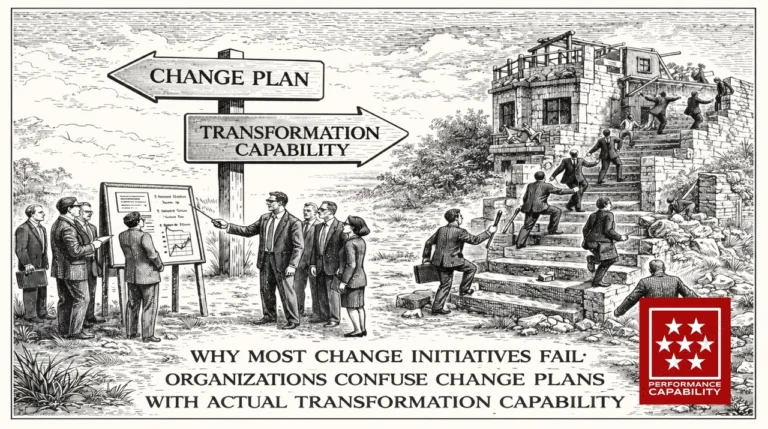
This disconnect between performance and capability creates a capability gap—a situation where the desired outcomes (performance) outpace the underlying resources and skills (capability) needed to achieve and sustain them. In essence, companies and individuals want performance, but they need capability. Without investing in building the necessary capabilities, the pursuit of performance becomes unsustainable or limited. To understand this better, let’s explore how performance and capability interact and why capability must come first for effective and sustainable performance.
Performance: What Organizations and Individuals Want
Performance is the end goal for most businesses and professionals. Companies measure their success through performance metrics like revenue growth, market expansion, product launches, or operational efficiency. On a personal level, individuals might focus on performance in the form of career advancements, promotions, or meeting specific targets. These performance metrics are usually short-term, tangible, and easy to quantify.
In the high-pressure environment of modern business, performance becomes the key driver. The problem with focusing exclusively on performance, however, is that it can lead to shortsighted decisions. Organizations may push their teams to meet quarterly sales goals or boost productivity without considering whether they have the right infrastructure, skill sets, or resources in place. This “performance at all costs” mindset can deliver short-term gains but often leads to burnout, inefficiency, or stagnation in the long run.
Capability: What Organizations and Individuals Need
In contrast, capability refers to the underlying skills, knowledge, processes, and infrastructure that enable sustained performance. Capability is about equipping people and organizations with the tools and resources they need to not just achieve short-term goals but to consistently perform over time. Building capability involves investing in:
- Training and skill development: Ensuring individuals and teams have the competencies needed to perform at a high level.
- Education: Cultivating critical thinking and problem-solving abilities that allow for adaptation and innovation.
- Processes and systems: Establishing the organizational frameworks that streamline operations, improve efficiency, and support growth.
- Leadership and culture: Developing a culture that fosters continuous improvement, learning, and collaboration.
While performance delivers the outcomes organizations want, capability builds the foundation that makes those outcomes sustainable. It’s about creating a workforce that can not only meet current demands but also adapt to future challenges.
The Capability Gap: Wanting Performance but Needing Capability
The capability gap occurs when there is a disconnect between the desired performance outcomes and the actual capabilities needed to achieve them. This gap is a critical issue because performance goals often outpace the existing skill sets, processes, or infrastructure required to meet them. When companies or individuals push for performance without investing in the necessary capability, several problems arise:
- Unsustainable success: Teams might hit short-term targets, but without the proper skills and infrastructure, this success cannot be repeated. Eventually, performance will plateau or decline because the underlying capabilities are not strong enough to support ongoing growth.
- Burnout and inefficiency: When organizations focus too much on performance without addressing capability, it often leads to burnout among employees. Teams are pushed to deliver results without being given the proper tools or training, leading to stress, inefficiency, and declining morale.
- Missed opportunities for innovation: Performance metrics often focus on short-term results, which can stifle innovation. However, investing in capability, particularly through education and training, encourages creative problem-solving and forward-thinking strategies that can lead to long-term competitive advantages.
- High turnover: Employees who are not given opportunities to grow and develop their capabilities are more likely to leave. A workforce that feels underprepared or unsupported will have lower retention rates, which in turn undermines performance.
The key problem is that businesses and individuals often chase performance without realizing that capability must precede performance to be effective. Without strong capabilities, performance may be sporadic, inefficient, or entirely unsustainable. The most successful organizations recognize that capability is not a cost or distraction from performance, but rather a necessary investment in long-term success.
Capability Before Performance: Building Performance Capability
To close the capability gap, organizations and individuals must shift their focus from short-term performance metrics to long-term capability building. This means prioritizing capability first and trusting that sustained performance will follow. Here’s why this is crucial:
- Capability builds resilience: When teams are trained, educated, and equipped with the right tools, they become more adaptable and resilient in the face of challenges. This enables them to consistently perform even in volatile or rapidly changing environments.
- Capability leads to innovation: By focusing on education and the development of critical thinking skills, individuals and teams are better equipped to innovate and solve complex problems. This innovation drives performance beyond the basic metrics of sales and growth, positioning organizations as leaders in their field.
- Capability supports sustainable growth: Rather than pushing for short-term performance gains, organizations that invest in capability create a foundation for long-term growth. This includes building leadership pipelines, creating efficient systems, and nurturing a culture of continuous improvement.
- Capability enhances employee engagement and retention: Investing in employee development—through training, education, and skill-building—signals that the organization values its people. This leads to higher job satisfaction, better engagement, and improved retention rates, which in turn boosts performance.
Conclusion: Bridging the Capability Gap
In the race to achieve performance, organizations often overlook the importance of capability, yet it is capability that creates the conditions for long-term success. Performance represents what we want—sales, growth, efficiency—but capability represents what we need—skills, training, processes, and a culture that enables sustained achievement. The capability gap arises when the desire for results outpaces the investment in the resources and skills needed to generate those results.
To bridge this gap, organizations must adopt a mindset that values capability-building as a precursor to achieving high performance. When companies invest in capability—whether through education, training, or leadership development—they create the foundation for sustainable, repeatable success. In the end, closing the capability gap ensures that performance is not only achieved but also sustained and continuously improved upon.
Hi and thanks for reading this post. I hope you gained some value from it. Please sign up below and you will join my community for updates and live events. You can also find my main business at: www.performancecapability.com
© Ben Benson