The Man in the Water; Displaying The Four Living Virtues
On January 13, 1982, Air Florida Flight 90 crashed into the icy waters of the Potomac River just minutes after takeoff. The plane, struggling to ascend due to a combination of mechanical failure and heavy snow, collided with the 14th Street Bridge in Washington, D.C., before plunging into the frigid river below. The scene was chaotic, with survivors clinging to the wreckage as rescue helicopters struggled to navigate the icy waters and harsh weather conditions. Amid this tragedy, the actions of one unknown man—dubbed the man in the water—stood out as an extraordinary display of heroism.
This nameless man, who was one of the crash survivors, repeatedly passed the life-saving rescue rope to others rather than securing it for himself. Though he could have been pulled to safety, he chose instead to help others escape the freezing water, ultimately losing his life in the process. His actions embody what I call The Four Living Virtues of clarity, control, courage, and character, tying them together in a single, selfless act.
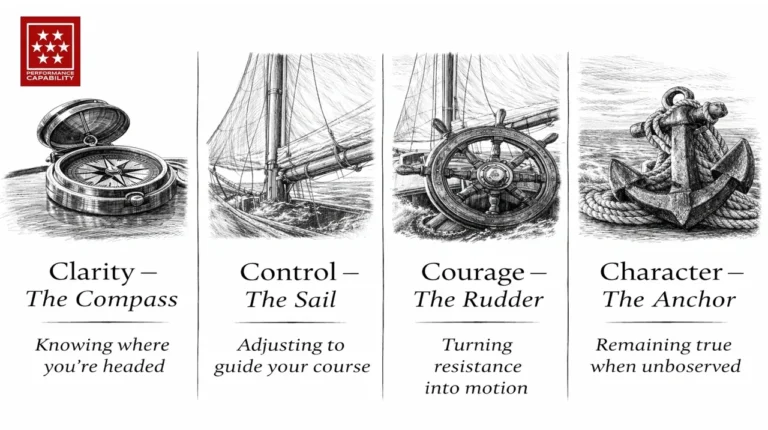
1. Clarity: Recognizing What Matters Most
In the freezing, life-threatening waters of the Potomac, this man demonstrated exceptional clarity. He understood the dire nature of the situation and focused on what mattered most—saving as many lives as possible. Despite the overwhelming chaos, his actions were guided by a clear purpose.
Clarity involves seeing the broader picture amidst confusion, and he exemplified this by prioritizing the survival of others over his own. Rather than panicking or succumbing to despair, he maintained a clear focus on the immediate situation: ensuring the rescue line reached others first. His vision and calm decision-making gave meaning to a moment of unimaginable crisis, transforming it into an opportunity to put the lives of other above his own.
2. Control: Mastering the Uncontrollable
In a situation where he had no control over the circumstances— the crash, the freezing waters, or the harsh weather—he exemplified an extraordinary degree of self-mastery. What he could control, however, was his response.
Rather than yielding to the instinct of self-preservation, he chose to manage his emotions and focus on the one thing within his power: his actions. Each time the rescue line came to him, he passed it to someone else, refusing to prioritize his own safety. His ability to remain composed under such extreme conditions showed not only self-discipline but also an extraordinary command of his thoughts and actions, ensuring that his limited strength was used for the benefit of others.
3. Courage: Confronting Fear and Danger
Courage is often defined as action in the face of fear, and this man embodied this virtue fully. In the icy water, every second brought him closer to hypothermia and death and he was probably aware of that, yet he repeatedly passed the rescue line to others. He understood that every moment mattered, and with each decision to forgo his own rescue, he increased the odds of survival for another person.
Choosing others’ lives over his own required immense bravery. His actions defied the primal human instinct for self-preservation, showing that courage isn’t about the absence of fear but about rising above it for a higher purpose. With every selfless act, he displayed a kind of courage that continues to inspire me to this day.
4. Character: Living by Values
At the heart of his heroism was his character. Integrity and moral conviction guided his actions, even when no one was watching, and no reward awaited him. His decision to prioritize others’ lives reflected not a fleeting impulse but a deeply ingrained commitment to his values.
Character is what defines us when the stakes are highest, and his actions revealed the depth of his humanity. He acted without expectation of recognition, fame, or gratitude, guided only by a profound sense of duty and selflessness. His sacrifice became a lasting symbol of what it means to live with purpose and honor.
The Legacy of Arland D. Williams Jr.
His name was Arland D. Williams Jr.’s and his actions in the icy waters of the Potomac transformed a moment of tragedy into an enduring example of the power of these four virtues. His selflessness saved lives, and his sacrifice continues to inspire people to this day. The renaming of the 14th Street Bridge in his honor serves as a lasting reminder of the significance of living with clarity, control, courage, and character.
Like Williams, we have the power to make choices that elevate others, honor our values, and leave a meaningful impact on the world. His story challenges us to reflect on our own lives and ask: Are we living in a way that matters? Are we embodying the four virtues that define true heroism and humanity?
In the end, a life of significance isn’t about what we achieve for ourselves—it’s about how we contribute to others and the legacy of virtue we leave behind.
A Life of Significance
The man in the water’s story demonstrates how clarity, control, courage, and character work together to create a life of true significance. These virtues are not isolated qualities but interwoven elements that define how we respond to life’s challenges and opportunities:
- Clarity allows us to focus on what matters most.
- Control ensures we act deliberately and with purpose.
- Courage empowers us to take bold action, even in the face of fear.
- Character grounds us in integrity, ensuring our actions align with our highest values.
Arland D. Williams Jr., saved five lives before succumbing to the freezing waters. His actions remind us that these four virtues are not reserved for moments of heroism—they are essential for living an everyday life of meaning and impact.
Legacy of Virtue
The 14th Street Bridge, renamed the Arland D. Williams Jr. Memorial Bridge, stands as a lasting tribute to his extraordinary sacrifice. His story continues to inspire, serving as a reminder that clarity, control, courage, and character are not just virtues for heroes—they are the cornerstones of a life well-lived.
Through his actions, the man in the water showed us that greatness lies in selflessness, and significance is found in how we lift others. His legacy challenges each of us to ask: Are we living with clarity? Are we exercising control? Are we acting with courage? Are we embodying character?
In the end, his life was defined not by survival but significance, not by not what he took for himself, but by what we give to others. The man in the water lived and died by this truth, leaving a legacy of these four virtues that will endure and be defined through, not just his moments in the freezing waters of the Potomac, but for generations to come.
Hi and thanks for reading this post. I hope you gained some value from it. Please sign up below and you will join my community for updates and live events. You can also find my main business at: www.performancecapability.com
© Ben Benson